
You don’t just feel better after training by chance. There’s a reason for it.
Exercise doesn’t only build physical strength. It helps reduce stress, improve focus, and create a sense of control through structured movement. As the body releases endorphins, mood improves and mental clarity follows.
At Vision Elite, training is designed to strengthen both body and mindset, supporting performance inside and outside the gym.
In this blog, we will explore how exercise supports mental health, including its role in stress reduction, focus, and overall performance.
Exercise and Stress Reduction
One of the key benefits of exercise is its ability to reduce stress.
Regular physical activity provides a controlled outlet to release tension. Instead of carrying stress throughout the day, training allows you to channel that energy into movement. Whether it’s a structured session or a simple routine, the health benefits go beyond the physical.
Over time, consistent training helps regulate stress levels and improves your ability to stay calm under pressure.
The Role Of Endorphins
That feeling you get after a good workout is not random. It is a biological response.
Exercise stimulates the release of endorphins, which play a key role in improving mental health. These chemicals help elevate mood, reduce stress, and improve mental clarity.
This is one of the key reasons why people often ask, how does exercise improve mental health. The answer lies in both the physical and neurological impact of consistent movement.
Reduce Depression And Anxiety

Exercise can play a powerful role in managing symptoms of depression.
When energy is low and motivation feels out of reach, movement is often the last thing people turn to. However, research shows that regular physical activity can be as effective as medication for mild to moderate depression, without the side effects.
Recent Exercise and Mental Health Statistics from a study by the Harvard T.H. Chan School of Public Health found that running for just 15 minutes a day or walking for an hour can reduce the risk of major depression by up to 26 percent. Consistent training not only helps improve mood but also reduces the likelihood of relapse over time.
These mental health benefits of exercise are driven by real changes in the brain. Exercise supports neural growth, reduces inflammation, and promotes activity that improves emotional balance.
In addition, training provides a break from negative thought patterns, creating space to reset mentally and regain control.
Improve Sleep Quality
Sleep plays a critical role in both mental health and performance.
Regular physical activity helps regulate your sleep cycle, making it easier to fall asleep and improving overall sleep quality. Deeper sleep supports recovery, stabilizes mood, and improves focus throughout the day.
Research from Johns Hopkins Medicine shows that exercise can help you fall asleep faster and spend more time in deep sleep, the stage that is most important for physical and mental recovery.
Better sleep also helps reduce fatigue, improve emotional balance, and support long-term mental health.
For best results, it’s important to time your workouts well. Training earlier in the day or allowing time to wind down after exercise can help your body transition into restful sleep more effectively.
Boost Confidence
Confidence is built through action, not just results.
Exercise strengthens self-belief through consistent effort. Every session completed, every improvement made, and every challenge pushed through reinforces a sense of progress.
Unlike short-term motivation, confidence comes from consistency. Showing up regularly, even on low-energy days, builds trust in your ability to follow through.
This is where physical activity goes beyond fitness. It helps you develop discipline, resilience, and a stronger mindset. As progress becomes visible, both physically and mentally, confidence grows naturally.
That confidence does not stay in the gym. It carries into everyday life, influencing how you handle challenges, make decisions, and approach new opportunities.

Enhance Brain Function
Exercise has a direct impact on how the brain functions.
Regular physical activity, including aerobic exercise and strength training, stimulates the release of brain-derived neurotrophic factor (BDNF). This supports the growth of new neural connections and strengthens memory.
This is a key part of how exercise and mental health are connected. Better brain function leads to stronger focus, clearer thinking, and improved decision-making.
Over time, consistent training helps keep the brain sharp, supports cognitive performance, and contributes to long-term mental well-being.
Strengthen Social Connection
Exercise is not just about individual effort. It also creates opportunities to connect with others.
Training in a structured, coach-led environment builds accountability and consistency. Being around others who are working toward similar goals creates motivation and a sense of belonging.
This connection plays an important role in supporting mental health, as social interaction helps reduce feelings of isolation and improves overall well-being.
Group sessions also make training more engaging, helping individuals stay committed and consistent over time.
At Vision Elite, training is designed to provide both structure and a supportive environment that keeps individuals motivated and progressing.
Build Discipline And Routine
A consistent training routine creates structure. Following a routine builds discipline over time, reducing decision fatigue and creating stability.
When you decide to start exercising, you aren’t just committing to a physical change; you are establishing a reliable anchor in your day. Having a structured Exercise Plan ensures that you don’t have to rely on fleeting motivation; instead, you rely on a system that supports your mental health even on your toughest days. Over time, the discipline developed through training carries into other areas of life, making it easier to stay committed to goals and maintain progress.
Training As A Mental Reset
Training creates space to disconnect from daily distractions.
It allows you to step away from screens, responsibilities, and mental noise, and focus on something controlled and intentional.
This shift helps clear the mind, improve clarity, and restore energy.
Even a single session can act as a reset, helping you return to your day with better focus and control.
Finding Strength Through Training: Mary Mileo’s Story
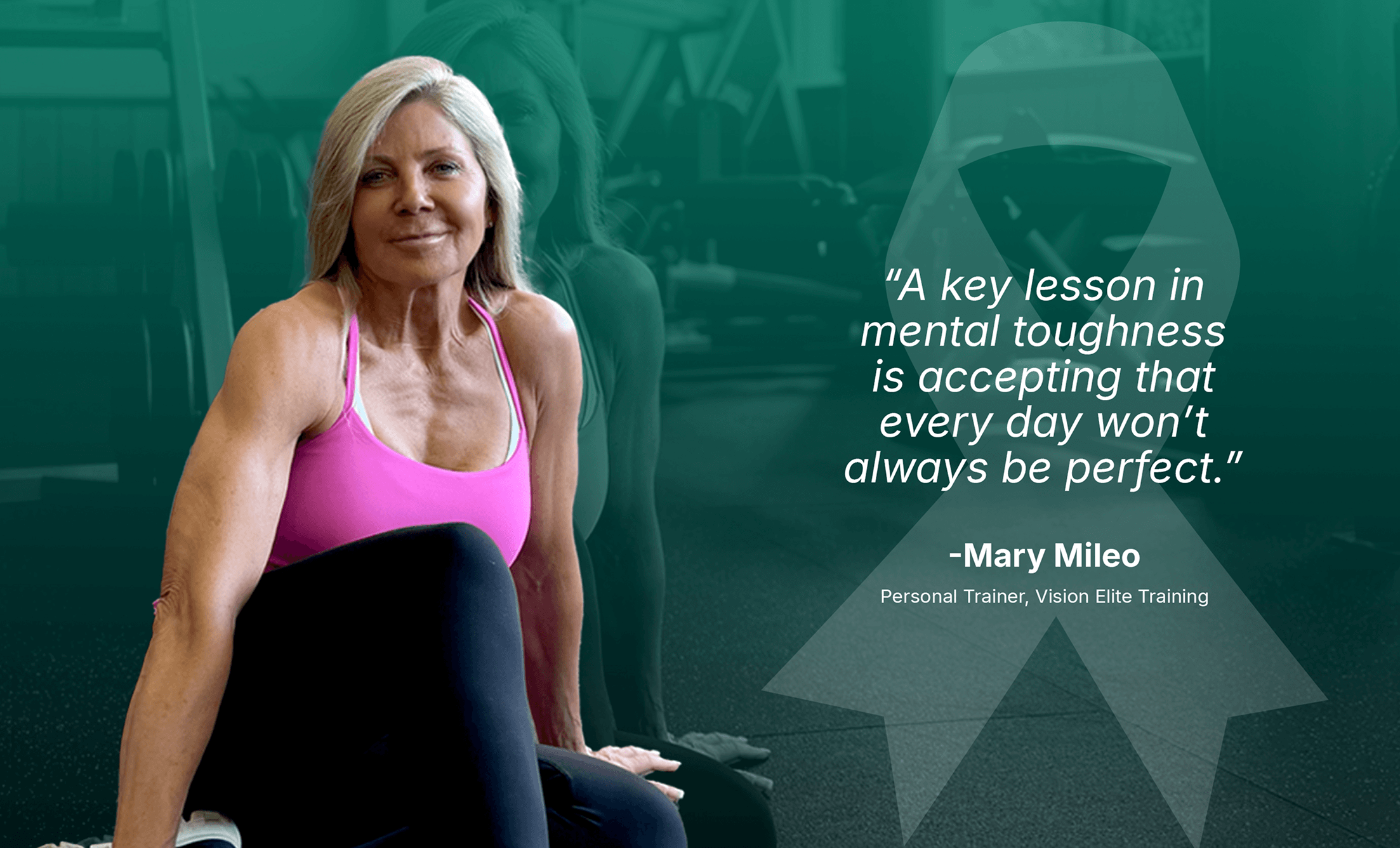
“I was diagnosed with Adult onset Type 1 Diabetes in 2005. The challenges were and still are many. It is a daily, minute to minute struggle…. If you let it!!! I made the decision early on to find the strength within myself to fight this battle as a warrior who defies expectations. A key lesson in mental toughness is accepting that every day won’t always be perfect. Living with diabetes requires thousands of extra decisions daily. Choosing to exercise through your daily challenges is itself an act of immense mental strength!
For many, the gym isn’t just about lifting weights and looking good. It’s a tool for managing depression and anxiety, helping to regain an appetite for feeling great about yourself. Many of us have an “invisible” fight every day and feel as if we are on a relentless rollercoaster. Finding your mental strength through exercise and training builds a unique kind of grit, where the gym becomes a place to reclaim control!.
Leave it at the door! Let the gym be your sanctuary where you can leave all the stresses of your day ahead at the door. Come in and build the mental strength to tackle your day.”
Strong Mind, Strong Body
A strong body is built through effort. A strong mind is built through consistency.
The two are connected. The way you train shapes how you think, how you respond, and how you perform under pressure.
The mental health benefits of exercise go far beyond the gym. From improving mood and focus to building confidence and resilience, regular physical activity supports how you show up every day.
At Vision Elite Training, every session is designed with purpose. Through structured training, discipline, and routine, you build not only physical strength but the mental clarity and control needed for long-term performance.
Throughout the month of May, we will be sharing educational content across our social media platforms, highlighting how training supports mental health, performance, and overall well-being.