You crushed your workout.
The treadmill says 300 calories. Your shirt is soaked. Your watch congratulates you. So naturally, that extra slice of pizza later feels… earned.
But here’s the problem: your body doesn’t keep score that way.
You can’t undo poor food choices with more exercise. And your workouts shouldn’t be a punishment for what you ate.
You may train regularly but still feel tired or recover slowly. If you don’t see the progress you expect, your workout may not be the problem. It may be what’s happening on your plate.
The good news? You don’t need a perfect diet, endless restrictions, or a life without pizza. You simply need to understand how training and nutrition work together.
Let’s break it down.
The “I’ll Just Burn It Off” Mindset
We’ve all heard it, and many of us have probably said it.
“I had dessert, so I’ll do extra cardio tomorrow.”
“I ate too much this weekend. I need to work it off.”
“I earned this meal because I trained today.”
It sounds harmless, but this mindset turns food and exercise into a constant game of earning and paying back. Exercise becomes punishment. Food becomes something to feel guilty about.
Neither is a healthy or sustainable way to approach fitness.
Exercise Is Not a Reset Button
Your workout does a lot for your body. It can improve strength, cardiovascular fitness, mobility, mood, and overall health. But it isn’t an “undo” button for everything you eat.
Think about someone who trains hard three times a week but spends most days skipping meals, relying on takeout, barely drinking water, and sleeping five hours a night. Adding another 20 minutes to the treadmill might increase their activity, but it doesn’t address the habits affecting their energy, recovery, and overall progress.
The goal shouldn’t be to exercise more to compensate for food.
The goal should be to create habits that work together.
The goal should be to create habits that work together.
Train to get stronger. Eat to support your body. Enjoy food without feeling like you have to earn it.

You’re Training Hard. So Why Aren’t You Seeing Results?
This can be one of the most frustrating parts of a fitness journey.
You’re showing up. You’re completing your workouts. You’re sweating. You’re getting stronger. But something still feels off.
Maybe your energy crashes halfway through your session. Maybe you’re constantly sore. Maybe you’re not seeing the changes you expected.
Before assuming you need to train harder, take a look at what’s happening outside the gym.
You’re Not Eating Enough Protein
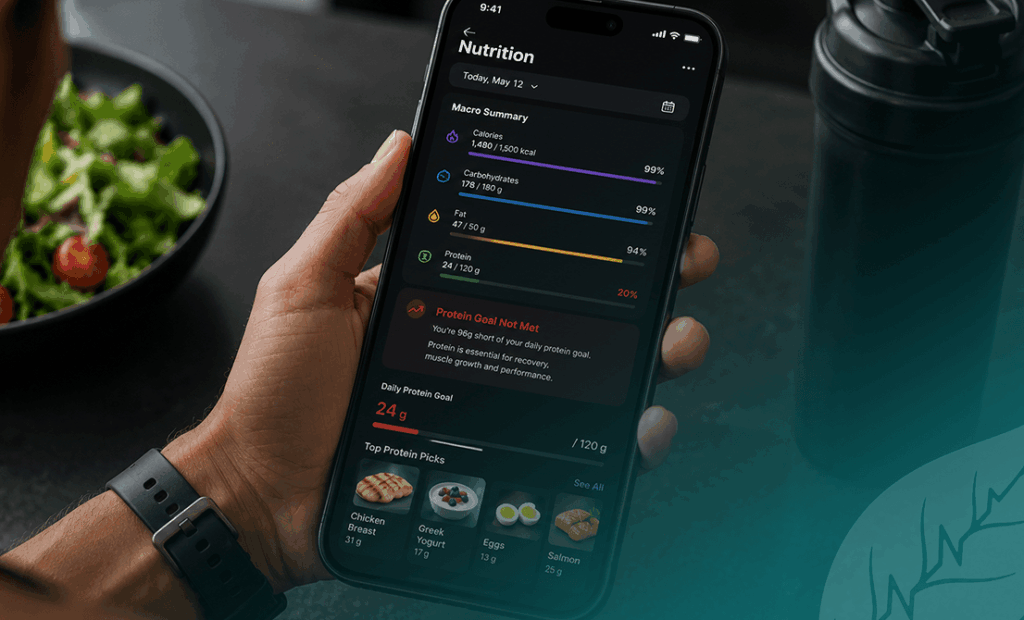
You finish a tough strength session and feel accomplished. Then lunch is a small salad with almost no protein. The salad isn’t the problem. The missing fuel might be.
Resistance training challenges your muscles, but your body also needs the right nutrients to support repair and recovery. Protein plays an important role in that process.
That doesn’t mean every meal needs to revolve around a giant steak or a protein shake. It simply means being intentional about including quality protein sources throughout your day.
Think:
- Eggs with breakfast
- Greek yogurt as a snack
- Chicken, fish, tofu, beans, or lentils with meals
- A balanced post-workout meal
Your workout sends the signal. Your nutrition helps support the response.
You’re Under-Fueling Your Workouts
Not every nutrition problem comes from eating too much. Sometimes, people simply aren’t eating enough to support the amount of activity they’re doing.
Picture this: you skip breakfast, have coffee, rush through a busy morning, and then try to power through a demanding workout in the afternoon. Halfway through, your energy disappears. You might think:
“I’m out of shape.”
But the real issue could simply be that you’re asking your body to perform without giving it enough fuel.
If your workouts regularly leave you feeling completely drained, your performance is dropping, or you find yourself extremely hungry later in the day, it may be worth looking at how you’re fueling around your training.
You’re Stuck in the “Perfect Monday” Cycle
Monday arrives, and you’re ready. No sugar. No takeout. No snacks. No eating after 7 p.m. Everything is going to be “perfect.” By Friday, you’re exhausted by your own rules.
The weekend arrives, the restrictions disappear, and by Sunday night, you feel like you’ve “ruined everything.” So what happens? You start again on Monday.
This all-or-nothing cycle is one of the biggest barriers to consistency. A nutrition plan that only works when life is perfectly organized probably isn’t going to work for very long.
A better approach?
Build habits that leave room for real life
What You Eat Affects More Than Your Weight
Nutrition conversations often focus on one thing: the number on the scale. But food affects far more than body weight.
It can influence how energized you feel during a workout, how well you recover afterward, and how consistently you can perform over time.

Energy
Ever had a workout where everything felt unusually heavy?
The dumbbells haven’t changed. The treadmill isn’t suddenly steeper. But your body just doesn’t have its usual energy.
There can be many reasons for an off day, but poor fueling may be one of them.
Your body needs energy to perform. Consistently showing up to demanding workouts under-fueled can make training feel harder than it needs to.
Recovery
Your workout ends when you leave the gym. Your body’s work doesn’t.
Recovery continues long after the final rep. Nutrition, hydration, rest, and sleep all play a role in helping your body prepare for what comes next.
If you train hard on Monday but spend Tuesday feeling completely depleted, the answer isn’t always to push harder. Sometimes, the smarter move is to recover better.
Muscle Growth
You can do every squat, deadlift, and press in the program, but muscle growth isn’t just about what happens while you’re holding the weights. Training provides the challenge. Recovery gives your body the opportunity to adapt.
That means your meals, protein intake, sleep, and overall consistency matter too.
The weights are only part of the equation.
So, What Should Actually Be on Your Plate?
Here’s where nutrition often becomes unnecessarily complicated.
One person tells you to avoid carbs. Another says you should eat six times a day. Someone online has eliminated an entire food group and claims it changed their life. Meanwhile, you’re standing in your kitchen wondering what you’re actually supposed to eat.
For most people, building a balanced meal doesn’t need to be that complicated.
Start With Protein
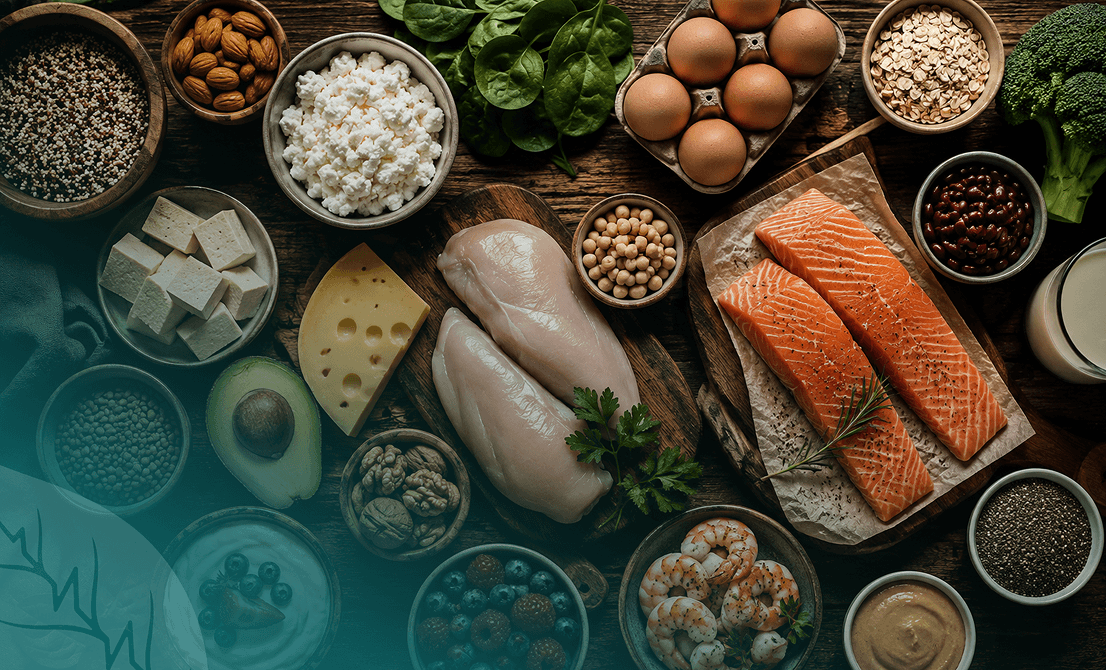
Choose a quality protein source that works for your preferences.
That might include:
- Chicken or turkey
- Fish
- Eggs
- Greek yogurt
- Beans or lentils
- Tofu or other plant-based proteins
Add Carbohydrates for Energy
Carbohydrates can be an important source of energy, especially for active people.
Options might include:
- Rice
- Potatoes
- Oats
- Whole grains
- Fruit
No, eating a potato doesn’t automatically undo your workout.
Add Color
Fruits and vegetables bring variety to your plate and provide a range of important nutrients.
A simple challenge: How many colors can you add to your meal?
Include Healthy Fats
Foods such as avocado, nuts, seeds, and olive oil can also be part of a balanced approach.
The goal isn’t to create the most Instagram-worthy plate every single time.
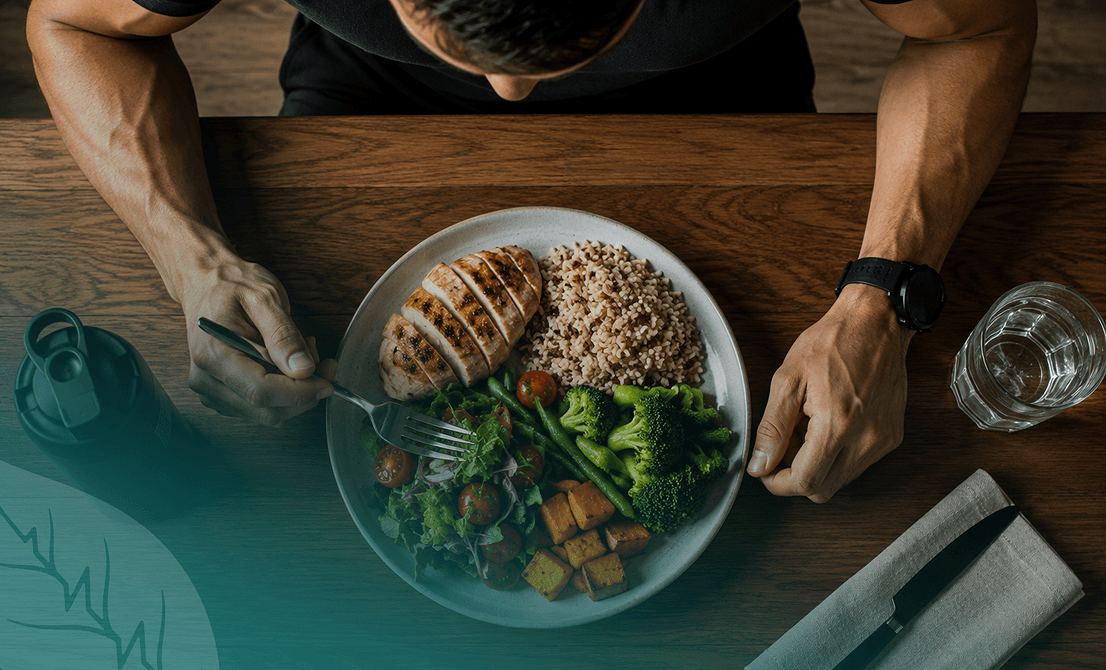
It’s to build meals that support your body and are realistic enough to repeat.
Protein. Carbohydrates. Color. Healthy fats.
Simple beats complicated when simple is something you can actually stick with.
Stop Trying to Earn Your Food
Let’s say you go to a birthday dinner.
You have the appetizer. You order the meal you actually want. You have a slice of cake.
The next morning, you wake up thinking:
“I need to burn that off.”
But one dinner didn’t erase weeks of consistent habits.
Just as one workout doesn’t instantly transform your fitness, one meal doesn’t destroy it. You don’t need to run five miles because you ate dessert. You don’t need to skip breakfast because you had pizza the night before. And you don’t need to turn your next workout into punishment.
Fitness should add to your life, not create a cycle of guilt around food.
One Meal Won’t Make or Break Your Progress
Progress is built through patterns.
One balanced meal won’t instantly create results. One indulgent meal won’t instantly take them away. What matters far more is what you do consistently over time.
If most of your habits support your goals, there can still be room for birthdays, vacations, dinners out, and foods you simply enjoy.
Consistency beats perfection every time.
The Scale Isn’t the Whole Story Either

There’s another common trap in fitness: allowing one number to decide whether you’re making progress.
You step on the scale.
The number hasn’t moved.
Immediately, you think: “Nothing is working.”
But is that actually true?
Maybe you’re getting stronger.
Maybe your clothes fit differently.
Maybe your measurements are changing.
Maybe you’ve gained lean muscle while changing your body composition.
A traditional scale can’t tell you all of that. It only gives you one number.
Look Beyond Body Weight
Body weight can fluctuate for many reasons, and it doesn’t tell you how that weight is distributed.
That’s why looking at progress through a wider lens can be helpful.
At Vision Elite Training, a 3D Body Scan can provide additional insights into metrics such as body composition and measurements, helping you see progress beyond the number on a traditional scale.
Because sometimes, progress is happening even when the scale isn’t giving you the full story.
Training and Nutrition Are Teammates, Not Opponents
Imagine trying to build a house.
Your workouts are the construction crew.
They show up. They do the work. They create the demand for change.
But if you never deliver the building materials, progress becomes much harder.
Nutrition helps provide the resources your body needs to support your training and recovery.
One doesn’t replace the other.
You can’t eat one “perfect” meal and expect it to replace consistent training.
And you can’t expect an extra treadmill session to solve every nutrition habit.
The strongest approach is when the two work together.
Train with purpose. Fuel with intention. Recover consistently.
You Don’t Need a Perfect Diet. You Need a Better Strategy.
If all of this sounds like another list of things you need to get “perfect,” take a breath.
That’s not the point.
You don’t need to overhaul your entire life overnight.
Start with a few realistic habits:
- Include Protein Regularly: Look at your usual meals and ask: Where’s the protein?
- Fuel Your Training: If you’re regularly going into workouts with no energy, look at what and when you’re eating beforehand.
- Stay Hydrated: Keep water accessible throughout the day instead of waiting until you’re already thirsty.
- Build Balanced Meals Most of the Time: Not every meal needs to be perfect. Aim for a pattern you can maintain.
- Make Room for Foods You Enjoy: A sustainable approach to nutrition should still leave room for real life.
- Focus on Consistency: The plan you can follow for months will usually take you further than the “perfect” plan you can tolerate for five days.
Final Thoughts: You Can’t Outrun Your Everyday Habits
The treadmill isn’t the enemy.
And neither is the fork.
The problem begins when we expect one to cancel out the other.
Your workouts should challenge you, build you, and help you become stronger. Your nutrition should give your body the fuel it needs to support that work.
You don’t need to eat perfectly. You don’t need to spend hours doing cardio. And you certainly don’t need to punish yourself for enjoying your favorite foods.
You need a strategy that works with your goals, your training, and your life.
Because lasting results aren’t built by trying to outrun what you ate.
They’re built by learning how to fuel where you want to go.
Train Smarter. Fuel Better. Know Your Body.
At Vision Elite Training, we believe progress goes beyond what happens during your workout. Training, nutrition, recovery, and understanding your body all work together to help you move toward your goals.
If you’re unsure whether your current nutrition habits are supporting your training, Mary Mileo, Vision Elite Training’s Nutrition Counselor, can help you build a more personalized and sustainable approach to fueling your body.
Want to understand your progress beyond the number on the scale? Our 3D Body Scan provides valuable insights into your body composition, including body fat, lean muscle, measurements, and changes over time.
Book a session with Mary Mileo at Vision Elite Training and take the guesswork out of your progress.