Every January, fitness resolutions take over. New workout plans, strict schedules, and ambitious goals fill calendars with good intentions. Yet by the end of the month, many routines quietly fall apart. This usually is not because people lack motivation, but because resolutions fail when they ask for too much, too fast.
A smarter way to start the year is to focus on consistency. Consistent training helps build real habits, supports long-term fitness goals, and creates progress you can maintain well beyond January. Instead of chasing quick results, small and repeatable actions help you stay active, improve strength, and avoid burnout.
In this blog, we will walk you through why consistency matters more than resolutions, how to build a sustainable fitness routine, and simple ways to stay on track as the year unfolds. At Vision Elite Training, we see year after year that the people who succeed are not the ones who train the hardest in January, but the ones who commit to steady, realistic progress.
Why Resolutions Feel Right but Rarely Last
January often starts with big promises. Many people approach their year’s resolution with an all-or-nothing mindset, expecting immediate change. But that momentum tends to fade quickly when expectations jump too far ahead of reality. Moving from occasional workouts to daily training, overhauling nutrition overnight, and chasing fast results creates pressure that is difficult to sustain.
As soreness builds and schedules fill up, missing one session can easily turn into missing a week. What begins as motivation slowly turns into frustration, not because effort is lacking, but because the plan was never designed to last.

What Consistency Actually Looks Like in Real Life
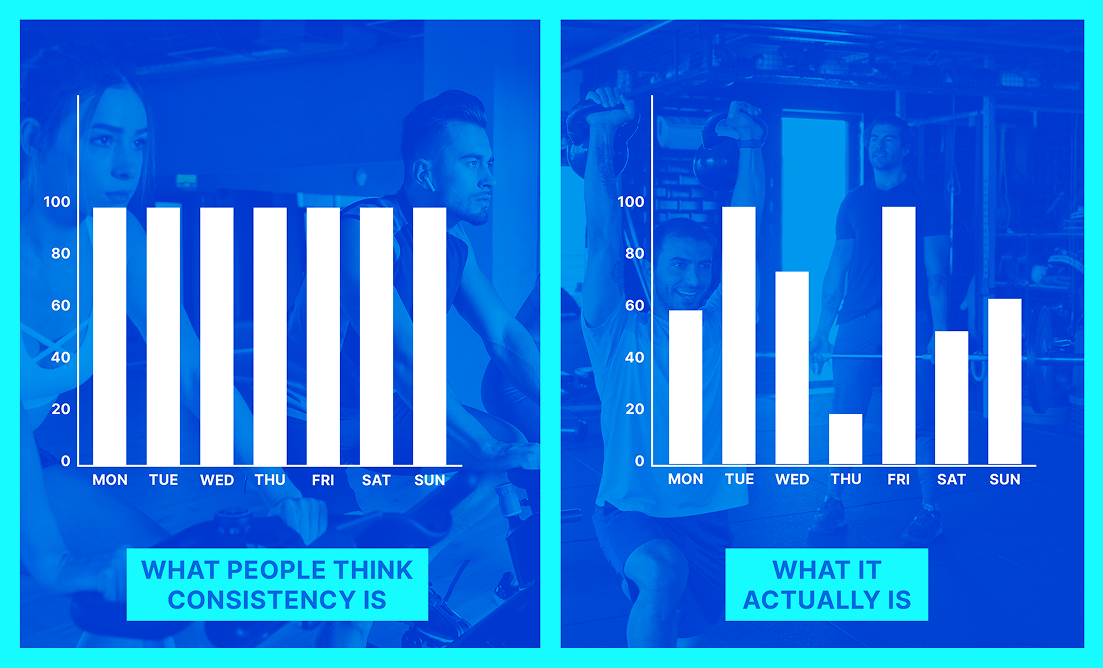
Consistency is often mistaken for giving the same level of effort every single day. In reality, it moves up and down. Some days feel strong and productive, while others feel slower or less focused. Both still count. Progress comes from continuing to show up across the week, even when effort looks uneven. High-energy sessions push you forward, lower-energy days maintain momentum, and rest or lighter training prevents burnout. When consistency is flexible rather than rigid, it becomes something you can maintain long term instead of something that breaks at the first disruption.
The January Trap Most People Fall Into
January often creates the urge to reset everything at once. Training schedules become packed, nutrition rules become strict, and expectations rise quickly. At first, this all-in approach feels productive, but it rarely leaves room for flexibility. When life inevitably interferes, even small disruptions can feel like failure.
This pressure leads many people to pause rather than adjust. Missing a workout or feeling low on energy is treated as a setback instead of a normal part of the process. Over time, this cycle of stopping and restarting becomes more exhausting than the training itself.
Letting go of the all-or-nothing mindset opens the door to a more sustainable way of training.
Why Consistency Always Beats Motivation
Motivation is often treated as the starting point for progress, but it is also one of the least reliable tools. It rises and falls based on sleep, stress, weather, and mood. Some days it shows up strong, and other days it disappears completely. Basing a fitness routine on motivation alone makes progress unpredictable.
Consistency removes that uncertainty. When training becomes part of a regular schedule, it no longer depends on how motivated you feel in the moment. Sessions happen because they are planned, not because you feel inspired. Over time, this approach builds trust in the process and confidence in your ability to show up, even on low-energy days.
This is why steady routines outperform short bursts of effort. Showing up consistently, even when workouts feel average, keeps momentum intact. Strength improves gradually, movement becomes more efficient, and training starts to feel like a normal part of life rather than a constant decision. Consistency turns effort into habit, and habit is what carries progress forward long after January ends.
How Habits Make Consistency Easier
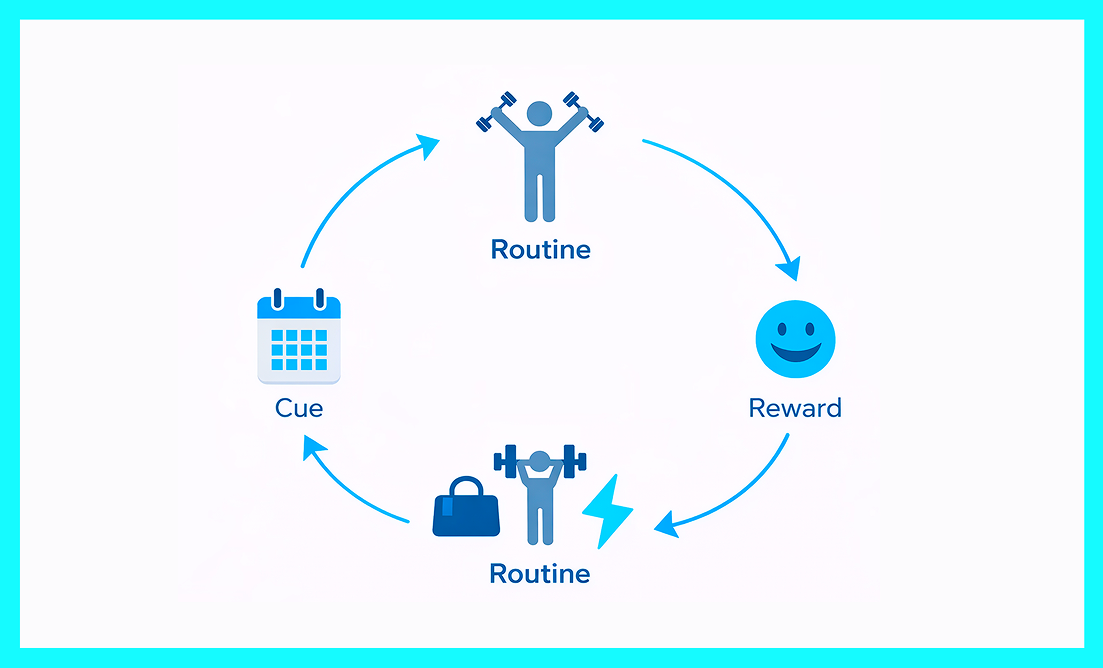
Consistency becomes much easier when training turns into a habit instead of a decision you have to make every day. Research on habit formation shows that behavior follows a simple cycle made up of a cue, a routine, and a reward. When this cycle repeats often enough, action becomes automatic and no longer relies on motivation.
In fitness, the cue is usually something small and predictable. It could be packing your gym bag, blocking the same time in your calendar, or simply walking into the same training space each week. The routine is the workout itself, kept familiar enough to feel manageable. The reward does not need to be dramatic. Feeling accomplished, energized, or even relieved after showing up is often enough to reinforce the loop.
Over time, repeating the same sequence reduces friction. Training stops feeling like something you have to convince yourself to do and starts feeling like part of your normal routine. This is why consistency lasts longer than motivation. When habits are in place, progress continues even on low-energy days.
A Simple Checklist for a Sustainable Fitness Routine
- Choose a weekly training schedule you can maintain consistently, not just one that sounds impressive
- Aim for two to four structured sessions per week based on your current lifestyle
- Keep workouts realistic in length so they fit into busy days
- Allow flexibility for lower-energy days without skipping entirely
- Focus on quality movement rather than maximum intensity every session
- Adjust workout intensity or duration instead of stopping when life gets busy
- Track consistency week to week instead of daily perfection
The Role of Structure and Guidance
Consistency becomes easier when training has structure. Without a plan, workouts often depend on mood or guesswork, which makes it easier to skip sessions or lose direction. Structure removes that friction by providing clarity on what to do, when to do it, and how to progress safely.
Guidance plays a key role in keeping that structure intact. Trainer-led programs help adjust workouts based on energy, recovery, and progress instead of forcing a one-size-fits-all approach. At Vision Elite Training, structure is designed to support consistency, not extremes. The goal is to help clients keep moving forward steadily, even when life gets busy.

What Progress Looks Like Beyond the Scale
One of the biggest obstacles to consistency is relying on the scale as the only measure of progress. While physical changes matter, they are often the last thing to appear. Consistent training produces other meaningful improvements long before numbers change.
Better movement quality, increased confidence in exercises, improved recovery, and more stable energy throughout the day are all signs that a routine is working. These wins are easy to overlook, but they are strong indicators of sustainable progress. When success is measured by showing up and improving gradually, it becomes easier to stay committed and avoid frustration.

Staying Consistent When Life Gets Busy
Life does not slow down just because you started a fitness routine. Work deadlines, family commitments, travel, and unexpected changes are part of everyday life. Consistency is not about avoiding these disruptions. It is about knowing how to respond to them.
Missing a workout or scaling back for a week does not erase progress. Shorter sessions still count. Lower-intensity workouts still matter. Returning without guilt is far more effective than waiting for the “perfect” time to start again. Fitness consistency is built by adjusting, not quitting, and by treating training as something flexible rather than fragile.
Build Habits That Last Beyond January
January is a starting point, not a finish line. The routines you build now should support you well beyond the first few weeks of the year. When consistency becomes the focus, fitness shifts from a temporary goal to a long-term habit.
By prioritizing realistic routines, structured guidance, and repeatable habits, progress becomes steady and sustainable. The strongest results are not built through extremes, but through consistent effort over time.
At Vision Elite Training, the focus is on building habits that fit your life, not forcing extreme plans that fade quickly. Through structured training, guidance, and realistic routines, consistency becomes easier to sustain and results follow naturally.
If you are ready to move past short-term resolutions and build a routine that truly lasts, connect with the Vision Elite Training team and take the first step toward long-term progress.